Cactus Background - Seamless Patterns: A Practical Guide for Designers and Creators
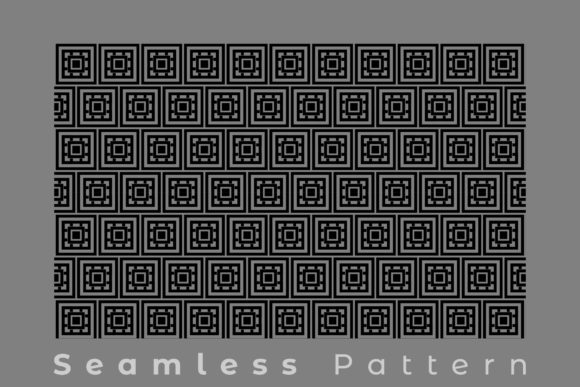
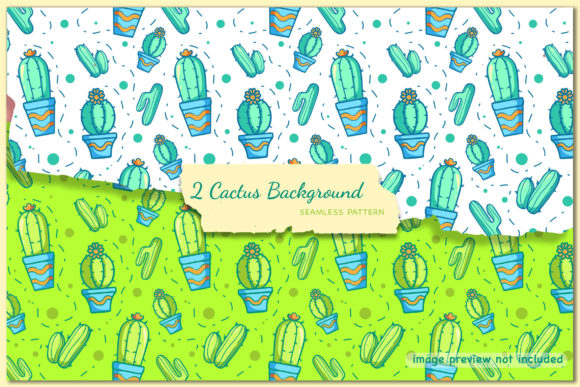
Seamless patterns featuring cacti offer a distinctive blend of organic texture, desert-inspired minimalism, and visual warmth. Cactus Background - Seamless Patterns refers to a curated digital asset—typically delivered as a downloadable package—that includes two unique, tileable cactus-themed designs. Unlike single-image backgrounds or non-repeating illustrations, these are engineered to repeat infinitely without visible seams, making them suitable for surfaces like website headers, social media banners, packaging mockups, textile previews, or presentation slides.
What Makes This Set Distinctive?
The value of Cactus Background - Seamless Patterns lies not just in its botanical theme, but in its intentional technical execution and format versatility. Each pattern is built from hand-drawn or carefully stylized cactus elements—think silhouetted saguaros, clustered succulents, or minimalist line-art arrangements—arranged with deliberate spacing and rhythm to ensure smooth tiling. The set includes two distinct variations, allowing users to choose between contrasting moods: one may emphasize negative space and subtlety, while the other offers denser foliage and higher visual contrast.
Crucially, the package delivers multiple file formats: EPS (for vector scalability in Adobe Illustrator CC), AI (native Illustrator CC files for direct editing), JPEG (for quick web use or print previews), and PNG (with transparent background support). This cross-format compatibility supports diverse workflows—from branding designers refining vector assets to marketers preparing social graphics in raster editors.
How It Compares to Other Pattern Options
When evaluating background resources, users often encounter three broad categories: stock photo-based textures, generative or algorithmic patterns, and hand-crafted seamless assets like Cactus Background - Seamless Patterns. Stock textures tend to prioritize realism over repeatability; many require manual tiling adjustments or suffer from visible joins when scaled. Generative tools (e.g., pattern-making plugins or AI image generators) offer speed and customization but often lack the refined balance of scale, spacing, and stylistic cohesion found in professionally designed sets.
In contrast, Cactus Background - Seamless Patterns reflects intentional design decisions—consistent stroke weight, harmonized color palettes, and tested tile boundaries. That attention translates into reliability: no need to troubleshoot misaligned edges or inconsistent shading across repeats. It also avoids the licensing ambiguity sometimes present with AI-generated visuals, since this is a clearly authored, rights-managed digital product.
Strengths Across Real-World Use Cases
Cactus Background - Seamless Patterns excels where consistency, clarity, and aesthetic alignment matter most:
- Websites & Digital Interfaces: Its clean lines and moderate contrast work well behind text overlays—especially on light or neutral UI backgrounds—without competing for attention.
- Packaging & Print Collateral: Vector formats (EPS and AI) allow infinite resizing for labels, boxes, or brochures without pixelation, preserving crispness at any scale.
- Social Media & Marketing Assets: PNG files with transparency let designers layer the pattern subtly over photos or gradients, adding texture without obscuring underlying content.
- Branding Projects with Nature Themes: Businesses in wellness, eco-products, boutique retail, or Southwest-inspired hospitality often seek cohesive visual language—this set provides an authentic yet adaptable motif.
Because both patterns are included, users can test variations side-by-side: one for hero sections requiring quiet elegance, another for product detail pages where gentle visual interest supports engagement.
Tradeoffs and Limitations to Consider
No pattern solution fits every scenario—and Cactus Background - Seamless Patterns is no exception. Its strengths are most apparent within defined creative parameters. For example:
- Color Flexibility: While the included JPEG and PNG files come in fixed colors, the EPS and AI versions allow full recoloring in Illustrator. Users comfortable with vector editing gain flexibility; those relying solely on raster formats will need to adjust hues externally or accept the provided palette.
- Scale Sensitivity: Like all seamless patterns, legibility depends on output size. At very small scales (e.g., favicon-sized tiles), fine details may blur or merge. It’s best suited for medium-to-large applications—not micro-UI elements.
- Thematic Specificity: The cactus motif carries strong regional and stylistic associations. It aligns naturally with desert, arid, or minimalist aesthetics—but may feel incongruent in contexts calling for urban grit, coastal softness, or high-tech precision.
Also worth noting: this is a static, pre-designed set—not a customizable generator. If your project demands frequent variation (e.g., dozens of color variants or layout permutations), you’d need to modify the files manually or pair them with additional tools.
When It’s the Right Choice—and When It’s Not
Cactus Background - Seamless Patterns tends to be the right choice when:
- You need production-ready, tested seamless assets without investing time in building or troubleshooting tiling logic.
- Your workflow involves both vector refinement (Illustrator) and raster integration (Photoshop, Canva, Figma via PNG/JPEG).
- You’re working within a defined brand direction that benefits from natural, grounded, or regionally resonant visuals.
- You value having two complementary options rather than one—allowing A/B testing or layered usage across touchpoints.
It’s less ideal when:
- You require dynamic pattern generation (e.g., randomizing plant placement per tile) or parametric control over density, rotation, or spacing.
- Your project mandates strict adherence to a custom color system not easily editable from the provided files—and you lack vector editing access or skills.
- You’re sourcing backgrounds for large-scale environmental graphics (e.g., wall murals) where ultra-high-resolution raster files or specialized print formats (like TIFF with bleed) would be preferable.
- The cactus theme itself conflicts with your audience’s expectations—for instance, a financial services dashboard aiming for neutrality and authority may find the motif too informal or contextually distant.
Making a Thoughtful Decision
Evaluating Cactus Background - Seamless Patterns isn’t about whether it’s “the best” in absolute terms—it’s about fit. Ask yourself: Does this support my timeline? Does it integrate cleanly into my existing software stack? Does its visual tone reinforce—not distract from—the message I’m delivering?
Compare it not only against other cactus-themed assets but also against broader alternatives: Would a neutral geometric pattern provide more versatility? Could a custom illustration better reflect brand uniqueness? Is a subscription-based pattern library more cost-effective if you regularly need new motifs?
The inclusion of both EPS and AI files signals thoughtful preparation for professional use—not just convenience, but respect for how designers actually work. Likewise, offering two patterns acknowledges that context shapes preference: what works for a landing page banner may fall short for a business card background. That duality supports decision-making, not dependency.
In practice, many users start by testing one pattern in a low-stakes environment—a slide deck, email header, or internal mood board—before committing to broader rollout. That measured approach helps confirm whether the rhythm, scale, and tone resonate with real-world application—not just preview thumbnails.